February is Black History Month; March is Women's History Month. Either one is an appropriate time to look back at the life of Dr. Carrie Best.
In the history of Nova Scotia — home of the largest indigenous Black community in Canada — Dr. Best was well-known and admired for her many years of work on behalf of her people. She died in 2001 but not before she had made her mark and helped to dispel some of the egregious racism that existed throughout her life.
She was born in New Glasgow in 1903. In 1946, she founded The Clarion, the first newspaper for Blacks in Nova Scotia. She wrote for newspapers and magazines and was a weekly columnist with The Pictou Advocate. She was the author of an autobiography, That Lonesome Road (which is also a social history of Nova Scotian Blacks.)
She was well-known across the country as an equal rights activist and was a founding member of the Kay Livingstone Visible Minority Women of Nova Scotia, an organization which works with women and young people to promote a sense of identity and pride of race, integrity and self-discipline “and to lift others, as we ourselves climb toward dignity and self-respect.”
Her last doctorate was awarded in 1992 by the University of King's College in Halifax. In 1970, she was awarded the Lloyd MacInnis Memorial Award for her work in social justice. In 1973, she received the first annual award of the National Black Coalition of Canada. In 1974, she was appointed to the Order of Canada. In 1975, she was granted the degree Doctor of Laws by St. Francis Xavier University.
In December of 1991, she received an award for outstanding contributions to human rights on the anniversary of the day the United Nations ratified the Declaration of Human Rights.
I interviewed her a few years before her death at her home in New Glasgow. She scoffed at my tape recorder and refused to let me turn it on, telling me she didn't want to talk into "that thing." I returned to the time-honoured tradition of taking notes. Her words are in italics. My occasional comments are not.
The 'religious hobo'
Dr. Best is in perpetual motion, rummaging in her well-packed briefcase for a pertinent document, punctuating her remarks with a gentle jab to her interviewer's shoulder or a soothing pat to the knee. Her energy and vitality are infectious. She often speaks with tongue in cheek.
* * *
I was invited to give the convocation address to the Atlantic School of Theology. I nearly dropped dead when they asked me! They can't mean me, I said. Do they know I don't go to church? Well, I slept on it. I do live close to God — I'm a born-again Christian — but I consider Christianity and “churchianity” two different things.
In the end, I accepted. I described my religious background to them and told them I was a “religious hobo.” When I was born, my parents were Salvationists and that's how I was registered at birth. When I was a young child, they left the Army because the first “black church” had been established in Pictou County. That was Baptist.
When I grew up, I had the bad taste to marry an Anglican but he was good enough to go to the Baptist church with me. After a time though, he missed the Anglican way of worshipping so ... he had accommodated me and I thought it was my turn to accommodate him so I went to the Anglican Church with him. But I missed the Baptists. The Baptists clap and laugh and sing and really know how to praise the Lord. So I went back to the Baptists. You can see I'm a religious hobo.
As I got older, I met so many wonderful people of all religions. I began to accept people for what they are — colour and creed don't matter. I believe that all roads that lead to God are good.
The root of my faith is Mother Earth. I think of all the little creeds as just different ways of interpreting God.
So that's what I told the graduates of the Atlantic School of Theology! * * *
That Lonesome Road is dedicated to her mother. On the dedication page, she wrote, “Society Said: You are an inferior being,/born to be a hewer of wood/ and a drawer of water/ because you are Black.... My Mother Said: You are a person, separate/ and apart from all other/ persons on earth. The pathway/to your destiny is hidden.../ you alone must find it./ ...And then she said.../ Take the first turn right,/ and go straight ahead...”
* * *
It's very painful to talk about some of the practices of the past. When I was growing up in New Glasgow, you couldn't eat in a restaurant. You couldn't get your hair cut. I went to jail. My son and I were at the movies; we sat downstairs, we went to the movies three times a week and we'd sat in the same seats for years. Then one day, the usher came to me and said, “You can't sit here. You have to go into the balcony.” I refused. They called the police; they had to drag me out of there. I was in jail for an hour. I was charged with causing a disturbance.
But at all times of my life, I've been a happy person. When I was young, I think we might have been broke but we were never poor. I was personally just as happy no matter what we had. My personal happiness had nothing to do with racial discrimination.
I confront bigotry face on. If I hear — and this has happened — that someone has called me “n****r,” I go right to that person. I look him right in the eye and I say, “did you call me 'n****r'? Now I've heard you did and all I want from you is to tell me if it's true. If you say it isn't, I'll believe you. We'll go together to the person who told me and you will tell him it isn't true.” You could always tell if it was true or not.
I'm not a n****r. I'm as good as anyone and better than most. I love everyone who's worthy of my love — but I won't sit back and take that kind of bigotry. * * *
Her memory seems unlimited. She quotes long stanzas of poetry, long passages from books, most of which were learned many years ago. She considers poetry to be part of her spiritual nature and part of her search for identity.
“The long hours spent in reading poetry,” she wrote in That Lonesome Road, “and the hundreds of poems memorized during my early childhood, my learning years, my yearning years and even now in later life, are fragrant memories of my journey in Search of an Identity. The irresistible habit of committing poems to memory still persists, and like deposits in a savings account, can be drawn out at will. The fund is never exhausted, for the interest grows both on deposit and withdrawal and is compounded daily.
“Black history was virtually non-existent in Nova Scotia during my learning years ... I remember when I received my cherished volume of the Poetry of Paul Lawrence Dunbar. I was ten years old ... I found to my utter astonishment and delight that I could read the Dunbar poems which were written in the Negro dialect as easily as those he had written in classic English. These gave me my first sense of Black Identity.”
* * *
Things have changed — but not enough. The white race has got to start learning from those they feel superior to. The Blacks have to take pride in who they are. When Frederick Douglass was a young slave, the white mistress said, “He's a bright boy. I'd like to teach him to read.” The slave master said, “When you educate a Negro, you unsuit him for a slave.”
Education is very important — more important than ever. We have to start teaching our children ourselves — in “kitchen schools.” We have to get funding from Black churches, Black organizations, and take the time to teach the children where they come from, how far they can go.
Being old now is not a disadvantage to me in all my projects. It's a blessing. God gave me this extra time to accomplish whatever I can, to meet wonderful people of all races. I'm so thankful.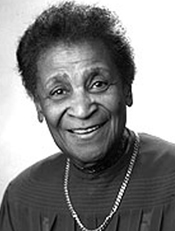
Monday, November 8, 2021
'As good as any, better than most'

Friday, December 11, 2015
The double standard strikes again
Just before the film Suffragette came out, I read a piece by Ijeoma Oluo, an American reviewer, who had decided not to review the movie.
Her reason was simple:
I didn’t want to write this review because I’m tired of writing about white people. I’m tired of fantasy worlds where people of color don’t exist. Where even the made up—excuse me—composite characters are white. It gets really disheartening to see yourself written out of popular culture, written out of history time and time again.
She spoke to the director who tried to explain why her movie was made the way it was but Oluo wasn't satisfied.
As a person of color, I’ve heard time and time again similar excuses for why people of color have not been represented, especially in history. But the truth is, we are not a recent invention. . .There’s photographic evidence that there were. . . women of color in the suffrage movement. But the written record is primarily white.
Neither Oluo nor the director, Sarah Gavron, used the words "historical accuracy" but that's what I heard and that's why this article resonated with me so strongly. I can't count the number of times that I've fought with men about women being "written out of history" in what was explained away as "historical accuracy" — in science, in music, in war and other distasteful activities. Australian author/feminist Dale Spender wrote a whole book called Women of Ideas and What Men Have Done to Them to show what has happened to women in literature.

Based on all my own experiences, I thought Oluo made an excellent point that if, in fact, your main character is fictional, you don't have much of a leg to stand on if you cite historical accuracy as the reason for omitting women of colour from your movie.
Oluo got a lot of support for her position — rightly so — and in some markets, there were protests, calls for boycotts and negative press.
Suffragette was getting mixed reviews and I was having mixed feelings about whether to see it or not. When I finally decided I would go see it, I looked it up for time and place of showing. I discovered it was no longer playing here. I'll have to wait for it in some other medium.
Meanwhile, I had gone to see Trumbo and Spotlight which I wrote about here. They're both good movies, getting good reviews, sure to be up for some big awards.
And guess what? In these big American movies, made by and starring high-profile actors, there are no people of colour and not a whisper of criticism about this omission. All the criticism on this subject has been reserved for a woman-centred movie, made by women, starring women, about a series of events that changed women's lives.
Suffragette was set in 1911. I'm not sure what the multi-cultural demographics in England looked like in 1911 but I'll tell you this: there were plenty of black Americans around in the 1950s when Trumbo was set and there were also plenty in the 2000s when Spotlight was set. None of them however (with the exception of a black police officer in a short scene in Spotlight) made an appearance in these two films.
It's even more disappointing when you consider that Trumbo was centred around people who were in trouble for being Communists — and the American Communist Movement was always seen to be a supporter of the Civil Rights Movement. And although Boston had many problems around integration, it seems likely that in the early 2000s there must have been people of colour at the Boston Globe and at other places around town.
Once again, the standards for a film made by women and about women have been set much higher than contemporary films by their male counterparts. It's an old story.
Thursday, October 15, 2015
Looking at our past: A postscript
Earlier this week, I wrote a piece called Looking at our past through rose-coloured glasses about the false perceptions we so often have of our country's past. Things were not as rosy as we remember them.
After I published that piece, my cousin, the author Dale Estey (he blogs right here), left me a poem on my Facebook page where I had let people know about the piece.
The poem was by the late Fred Cogswell. Fred was a distinguished poet, mentor to younger poets, long-time editor of The Fiddlehead literary magazine, and an old friend.
 Fred Cogswell
Fred's own life (as described in some detail at the link) is a good illustration of some of the very prejudices I was writing about. His father's side of the family had come to New Brunswick from New England and was granted land that used to belong to the expelled Acadians. His mother was of Acadian ancestry.
From the profile that I linked to just above:
Fred was aware of his mother’s Acadian ancestry when growing up; however, in deference to his father, he never investigated that part of his background until after his father’s death. The irony of those sorts of denials, and the limitations they placed on provincial autonomy, are still typical of the peculiar sociology of New Brunswick.
The complexity of his own life is reflected in his poetry.
I was glad to see this poem again because it's one of my favourites of Fred's. As I remarked to Dale, it is full of such seething anger and contempt.
Ode To Fredericton
White are your housetops, white too your vaulted elms
That make your stately streets long aisles of prayer,
And white your thirteen spires that point your God
Who reigns afar in pure and whiter air,
And white the dome of your democracy-
The snow has pitied you and made you fair,
O snow-washed city of cold, white Christians,
So white you will not cut a black man's hair.

Saturday, October 10, 2015
Looking at our past through rose-coloured glasses
On the one hand, I see the people saying, “I want my Canada back,” or, “I miss the country we used to be,” or variations on that sentiment.
In the same breath, there are references to what we did in 1938, when a ship carrying German Jews was turned back and its passengers had to return to Germany. There are also references to unwelcome immigrants over the years: Irish Catholic (micks), Italian (wops and dagos), Polish (polacks). There are, of course, numerous references to the First Nations.
We can’t have it both ways: either we used to have this nice country that accepted all cultures and religions equally or we have a sketchy history as quite an intolerant nation.
Which is it?
I grew up in northern New Brunswick. There was nary a Muslim in sight but there were the French and the Indians (sic) and to say they were second-class citizens is an understatement.
We had neighbours who were French. Their kids were smart in school and their house and yard were clean and tidy but in the neighbourhood, they were considered to be some kind of unusual French exception. We were still warned to stay away from the French we didn’t know. Head lice, or worse.
Bad feeling still exists. I have French friends who, if they weren’t going to visit family, would never set foot in New Brunswick.
I was scared of the Indians when I was a little girl. Most of the kids I knew were. Our family used to go for a Sunday drive and we’d often go through Burnt Church, an Indian reserve and one of the most beautiful regions on the Miramichi Bay. I just held my breath until we got through there safely.
In Nova Scotia, the history of the oldest indigenous black community in Canada is well-known: black loyalists who came after the American Revolution and were located to rocky lands where nothing could grow; blacks who came after the Civil War and after slaves were freed but who continued to be held in slavery in Nova Scotia; a tight-knit black community, Africville, who saw their homes bull-dozed in the spirit of urban renewal and integration but which led, in fact, to further isolation and alienation. African Nova Scotians continue to live, generations later, in a racially divided and racially-hostile society.
These examples are just in my little corner of Atlantic Canada. There are examples all over the country of the dominant cultural group making life less-than-comfortable for each generation’s designated “Other.”
Canada’s record of intolerance is not as bad as many countries and it may be among the better ones. The wistful longing to go back to when things were better, however, is just sentimental idealistic reminiscing.
We have to stop looking at the past through rose-coloured glasses and try looking ahead to the Canada we really want to be in the future. That has to start in the present.
