February is Black History Month; March is Women's History Month. Either one is an appropriate time to look back at the life of Dr. Carrie Best.
In the history of Nova Scotia — home of the largest indigenous Black community in Canada — Dr. Best was well-known and admired for her many years of work on behalf of her people. She died in 2001 but not before she had made her mark and helped to dispel some of the egregious racism that existed throughout her life.
She was born in New Glasgow in 1903. In 1946, she founded The Clarion, the first newspaper for Blacks in Nova Scotia. She wrote for newspapers and magazines and was a weekly columnist with The Pictou Advocate. She was the author of an autobiography, That Lonesome Road (which is also a social history of Nova Scotian Blacks.)
She was well-known across the country as an equal rights activist and was a founding member of the Kay Livingstone Visible Minority Women of Nova Scotia, an organization which works with women and young people to promote a sense of identity and pride of race, integrity and self-discipline “and to lift others, as we ourselves climb toward dignity and self-respect.”
Her last doctorate was awarded in 1992 by the University of King's College in Halifax. In 1970, she was awarded the Lloyd MacInnis Memorial Award for her work in social justice. In 1973, she received the first annual award of the National Black Coalition of Canada. In 1974, she was appointed to the Order of Canada. In 1975, she was granted the degree Doctor of Laws by St. Francis Xavier University.
In December of 1991, she received an award for outstanding contributions to human rights on the anniversary of the day the United Nations ratified the Declaration of Human Rights.
I interviewed her a few years before her death at her home in New Glasgow. She scoffed at my tape recorder and refused to let me turn it on, telling me she didn't want to talk into "that thing." I returned to the time-honoured tradition of taking notes. Her words are in italics. My occasional comments are not.
The 'religious hobo'
Dr. Best is in perpetual motion, rummaging in her well-packed briefcase for a pertinent document, punctuating her remarks with a gentle jab to her interviewer's shoulder or a soothing pat to the knee. Her energy and vitality are infectious. She often speaks with tongue in cheek.
* * *
I was invited to give the convocation address to the Atlantic School of Theology. I nearly dropped dead when they asked me! They can't mean me, I said. Do they know I don't go to church? Well, I slept on it. I do live close to God — I'm a born-again Christian — but I consider Christianity and “churchianity” two different things.
In the end, I accepted. I described my religious background to them and told them I was a “religious hobo.” When I was born, my parents were Salvationists and that's how I was registered at birth. When I was a young child, they left the Army because the first “black church” had been established in Pictou County. That was Baptist.
When I grew up, I had the bad taste to marry an Anglican but he was good enough to go to the Baptist church with me. After a time though, he missed the Anglican way of worshipping so ... he had accommodated me and I thought it was my turn to accommodate him so I went to the Anglican Church with him. But I missed the Baptists. The Baptists clap and laugh and sing and really know how to praise the Lord. So I went back to the Baptists. You can see I'm a religious hobo.
As I got older, I met so many wonderful people of all religions. I began to accept people for what they are — colour and creed don't matter. I believe that all roads that lead to God are good.
The root of my faith is Mother Earth. I think of all the little creeds as just different ways of interpreting God.
So that's what I told the graduates of the Atlantic School of Theology! * * *
That Lonesome Road is dedicated to her mother. On the dedication page, she wrote, “Society Said: You are an inferior being,/born to be a hewer of wood/ and a drawer of water/ because you are Black.... My Mother Said: You are a person, separate/ and apart from all other/ persons on earth. The pathway/to your destiny is hidden.../ you alone must find it./ ...And then she said.../ Take the first turn right,/ and go straight ahead...”
* * *
It's very painful to talk about some of the practices of the past. When I was growing up in New Glasgow, you couldn't eat in a restaurant. You couldn't get your hair cut. I went to jail. My son and I were at the movies; we sat downstairs, we went to the movies three times a week and we'd sat in the same seats for years. Then one day, the usher came to me and said, “You can't sit here. You have to go into the balcony.” I refused. They called the police; they had to drag me out of there. I was in jail for an hour. I was charged with causing a disturbance.
But at all times of my life, I've been a happy person. When I was young, I think we might have been broke but we were never poor. I was personally just as happy no matter what we had. My personal happiness had nothing to do with racial discrimination.
I confront bigotry face on. If I hear — and this has happened — that someone has called me “n****r,” I go right to that person. I look him right in the eye and I say, “did you call me 'n****r'? Now I've heard you did and all I want from you is to tell me if it's true. If you say it isn't, I'll believe you. We'll go together to the person who told me and you will tell him it isn't true.” You could always tell if it was true or not.
I'm not a n****r. I'm as good as anyone and better than most. I love everyone who's worthy of my love — but I won't sit back and take that kind of bigotry. * * *
Her memory seems unlimited. She quotes long stanzas of poetry, long passages from books, most of which were learned many years ago. She considers poetry to be part of her spiritual nature and part of her search for identity.
“The long hours spent in reading poetry,” she wrote in That Lonesome Road, “and the hundreds of poems memorized during my early childhood, my learning years, my yearning years and even now in later life, are fragrant memories of my journey in Search of an Identity. The irresistible habit of committing poems to memory still persists, and like deposits in a savings account, can be drawn out at will. The fund is never exhausted, for the interest grows both on deposit and withdrawal and is compounded daily.
“Black history was virtually non-existent in Nova Scotia during my learning years ... I remember when I received my cherished volume of the Poetry of Paul Lawrence Dunbar. I was ten years old ... I found to my utter astonishment and delight that I could read the Dunbar poems which were written in the Negro dialect as easily as those he had written in classic English. These gave me my first sense of Black Identity.”
* * *
Things have changed — but not enough. The white race has got to start learning from those they feel superior to. The Blacks have to take pride in who they are. When Frederick Douglass was a young slave, the white mistress said, “He's a bright boy. I'd like to teach him to read.” The slave master said, “When you educate a Negro, you unsuit him for a slave.”
Education is very important — more important than ever. We have to start teaching our children ourselves — in “kitchen schools.” We have to get funding from Black churches, Black organizations, and take the time to teach the children where they come from, how far they can go.
Being old now is not a disadvantage to me in all my projects. It's a blessing. God gave me this extra time to accomplish whatever I can, to meet wonderful people of all races. I'm so thankful.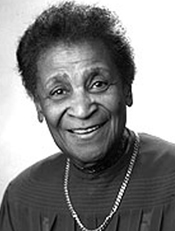
Monday, November 8, 2021
'As good as any, better than most'

Tuesday, December 10, 2019
Back in time: December 1989
This column was published in The Daily News in Halifax 30 years ago today, December 10, 1989. Four days earlier, 14 young women at École Polytechnique in Montreal had been separated from their male classmates and brutally murdered. Their murderer accused them of being feminists and said that feminists had ruined his life.
There were already people who were insisting that this act was an aberration, that the killer was a one-of-a-kind madman. Feminists fought that view long and hard and this year — 30 years later — it's finally been acknowledged that the massacre was motivated by misogyny and was an extreme instance of violence against women.
Meanwhile, a woman or girl is killed every three days in Canada, with a total of 118 killed by violence in 2019, according to the latest report from the Canadian Femicide Observatory for Justice and Accountability.
The only changes I've made in the column from 30 years ago are a couple of short additions in square brackets.
December 10, 1989
On Thursday morning, distinguished lawyer and former MP George Cooper made a little joke on CBC Radio’s Information Morning. He was discussing the recent NDP leadership convention with host Don Connolly and panel mates Dale Godsoe and Ray Larkin when he decided to use a colourful comparison to express his opinion about some aspect of the race.
It’s a good news/bad news sort of situation, he said, like that old joke about your mother-in-law driving over a cliff — trouble is, she was in your brand new Cadillac at the time. I believe I detected some laughter from the others and I’d be interested to know whether the CBC switchboard lit up with outraged callers, the way it does when someone says a rude word on the air. Somehow I doubt it.
In my household, we sat in stunned disbelief, hearing a joke which would be in poor taste at the best of times but was absolutely scandalous being told and snickered at the morning after the murder of 14 women at the University of Montreal.
It wasn’t the only joke being told that day. Francine Pelletier, a Montreal feminist who was interviewed extensively on the TV coverage of the murders, said that men in the corridors at Radio-Canada were treating the massacre in a most light-hearted way, one of them remarking, “I’ve often wanted to do that myself.”
At around the same time, a young friend of mine was walking into Tim Horton’s to buy some doughnuts. There were two men in front of her carrying a newspaper with a screaming headline about the murdered women and one of the men said something along the lines of, “way to go, buddy.”
Her friends asked her how she handled this awful moment; most of them felt, bravely, that they wished they’d been there. In retrospect, we can all come up with the enviable line, the cutting quip, the perfect putdown.
She said nothing, of course. There are few women — including me — who could respond to those men. Such verbal violence is part of what renders women powerless, unable to act, not so much from fear as from emptiness, from the debilitation that results from crying out for so long and not being heard.
I’ve been told so often — all feminists have — to lighten up, to learn to take a joke. They don’t really mean anything by it, you know. This week, finally, I’ve been told by men — among others, by Peter Gzowski [the late host of CBC Radio's Morningside] and his panel on the radio, by Tom Regan [a former columnist with The Daily News] on the phone, by my husband at home — that it is time for them to do something about their violent brothers.
They know now that they must begin listening to women and they must refuse — loudly — to listen to the dehumanizing “jokes” that so many of them allow to slip by. They must disdain the views of those who keep saying that the carnage in Montreal was an isolated act carried out by a madman.
They must examine and be willing to change their political, economic and judicial systems, all of which conspire to keep women in positions of dependence. They must observe their sons — their vocabularies, the games they play, the way they’re learning to deal with anger, the things they say about little girls. They must stop undermining the mothers and, once and for all, lay to rest that age-old excuse that “boys will be boys.”
They must not simply be available to provide protection; they must work actively to create a safer world, where their sisters and daughters and mothers can live with the same sense of security that brothers, sons and fathers take for granted. They must recognize and acknowledge that the 14 women in Montreal are only the most recent to die at the hands of a man, that in 1987, almost 70 per cent of women murdered in our country were murdered by the men they lived with.
One of the buttons we brought back from the Winnipeg NDP convention — where I saw the joy and exhilaration on the faces of the women who had worked to elect Audrey McLaughlin as their leader — bears the slogan “Men of quality are not threatened by women seeking equality.” The words seem almost horrible in their irony this week but the message remains true.
And so it’s time to take another step forward, to convince men that violence against women is the fault of men and — to resurrect an old phrase — if they’re not part of the solution, they’re part of the problem.
Tuesday, September 27, 2016
The ever-living never-ending blame game
As the US election season goes on, the underlying threat from Donald Trump against Hillary Clinton is that he's going to bring up the subject of Bill Clinton's infidelities. The clear implication is that if your husband cheats on you, it's your fault and you are automatically disqualified from being President.
Of course, when this came up recently, I assumed I had written something about the subject in the past. I went to my archives and found this column which I wrote in January of 1989.
(I should note that Chatelaine is a magazine that has gone through many incarnations in its long life, some of them better, some of them worse. When this was written, it was one of their bad times.)
The current issue of Chatelaine – boy, I hate to admit it when I occasionally pick one up – has an article about the difference between "The Other Woman" and "The Other Man". I'm not going to get into it because it's as ludicrous as most of their articles lately but it did get me to thinking about the Eternal Blaming Syndrome: the notion that everything that happens anywhere can somehow be blamed on some woman. Starting with Eve, of course.
So for example, if the married Mr. X runs off with Ms Y, there are two things you'll definitely hear: 1) "What a hussy that Ms Y is, to get her claws into another woman's husband." And, 2) "It serves Mrs. X right. If she can't hold onto her own husband, I've got no sympathy for her."
Notice who gets off scott-free in this romantic triangle – not too many people pass judgment on that treacherous snake-in-the-grass, Mr. X.
The blaming syndrome is found on a larger scale as well. Thus, even after all this time, we're still inundated in our magazines and newspapers with the propaganda that all of the ills of our present-day society can be directly attributed to the women's movement.
"Feminists," I was informed just recently, "are the ones who want all women to rush out and have a career and they make women who stay home and care for their families feel ashamed of what they do."
The propaganda works very well, doesn't it?
But the way I see it, it's feminist women who recognize that our society is founded, not on the "sanctity" of the family, as we've always been told, but on the unpaid and low-paid labour of half the work force – the half that takes care of the children and the elderly, that volunteers for work in the schools, hospitals, churches and around the communities, that provides housekeeping services for the paid labour force.
It's also feminists who demand that society place a higher value on the work that women traditionally do, whether it's in the home, the office, the restaurants or the factories. And because our society expresses value almost exclusively in monetary terms, feminists lead the fight for homemakers' pensions, fair divorce settlements, dependable child care for the benefit of all mothers and children, and pay equity for women who work outside their homes.
So how can anyone say that feminists don't respect women who fulfil traditional roles? On the absolute contrary, society had devalued all women's work long before the current women's movement came along.
Perhaps the misunderstanding has come about because feminists do see the need for economic independence. Too many women are forced to remain in dead and dying marriages or in violent homes because they have no money and no certain means of getting any. Many more women are deserted by their husbands (remember old Mr. X) and left to fend for themselves and their children and are forced onto social assistance and probably into a deadening cycle of poverty, struggle, job retraining, no child care, and hopelessness.
And in spite of all this, I still hear young women embarking on their marriage careers with stars in their eyes, thinking how wonderful it's going to be to share everything in life – including the husband's pay cheque. Most of them, on their wedding day, would never believe that the day will come when they'll ask for money and he'll demand "what do you want it for?" Or that they'll be trapped in a violent situation with nowhere to go and no money to get there.
So feminists believe this battle has to be fought on two levels. When they suggest marriage contracts, or job training and experience before marriage, and part-time work outside the home during the marriage it isn't because of lack of respect for homemaking and child-rearing. And when feminists fight for fair divorce settlements, for pensions for women, for more vigilance from the courts to see that child support payments are made, it isn't because of any cynicism about all women's right to choose the kind of work they do.
Instead, it's based on the observation that so many women do so much work for so little money and that can only be changed around when women's traditional work is valued and honoured – monetarily as well as all other ways.
It's also done with one eye firmly on the divorce and desertion statistics.


Friday, September 23, 2016
The myth of the 'weaker sex' lives on
I wrote this column in The Daily News in Halifax in 1990. I spent a lot of time, both before and since I wrote this, thinking of women's lives and how they have been misinterpreted and undervalued. The feminist writer, Dale Spender, wrote a book called There's Always Been A Women's Movement This Century.
This brought home to me that with a different slant and a different analysis, the lives of our mothers and grandmothers could be seen in a whole new light.
I would write some of this differently today but this is how I saw it in 1990.

How many times have you told friends, acquaintances, strangers at bus stops that, in your family, girls were encouraged to be strong and independent? How many times have you said, “my mother always told me I could be anything I wanted to be; I've never felt that I didn't have equal access to a good career and a decent life...”?
How many times have you expressed the novel idea that your mother and her sisters and their mother were the strong members of your family, the ones who held things together through thick and thin, who survived adversities without complaint, who displayed the kind of stamina and fortitude that you're now handing down to your daughters?
How many times did you think to yourself that your family was the exception?
I'm of the opinion that families with strong women are the rule rather than the exception and that the myth of “the weaker sex” is another part of the conspiracy that keeps women from fighting back against a system that keeps them down.
I think of so many ways that women's strengths are slighted – either by being taken for granted or scorned through derogatory attitudes towards “women's work.”
A few years ago, involved in my editing work, I came across this intriguing sentence in the minutes of a Women's Institute meeting: “It was decided to use the proceeds from the bake sale to buy our African family a goat.”
Well, no editor worth her paycheque is going to let that pass without finding out a little more. I found that this particular group had been supporting their family for some time in a program not unlike the foster child program except it included whole families. The women worked closely with international relief organizations and they had been told the goat would be easy to care for, wouldn't eat much and would provide milk and cheese for the family which could also be bartered for other special needs.
I checked with a few other groups and found that most women's organizations had, for years, been manoeuvring around governments and bureaucracies just as if they weren't there to provide people in other countries with life-supporting products but also with school supplies, hygienic provisions and things like eyeglasses, even children's toys.
I began to remember things from my own childhood: I remembered going door-to-door with my mother collecting woollen fragments and bits of fabric, packing it all in boxes, sending it away somewhere and seeing it come back, miraculously, as blankets. The blankets were sent “overseas,” along with more boxes of knitted wear, tonnes of it, it seemed, knit by my own auntie.
The women in my past – and in my present – don't expect any thanks for this kind of world's work. It's just as well as it usually goes unacknowledged.
There was another event that brought back some of the same memories. That was the time that a musician by the name of Bob Geldof organized a trans-Atlantic rock and roll concert called Live Aid. It ran on television over many hours and raised a huge amount of money for victims of famine in Africa.
In the months following the concert, Geldof was touted as a possible nominee for the Nobel Peace Prize; he was invited to Washington to give some advice to then American president, Ronald Reagan (that must have been some show); and he made an outspoken tour around the survival camps in Ethiopia, spouting opinions on the crisis at every stop among a multitude of cameras and microphones.
Now I have nothing against Bob Geldof – in fact, I kind of like him. I just think it's necessary to remind ourselves every five years or so that the concept of aid to the Third World was not invented recently and that for years, it's been alive and well in the church halls, parish centres, and rural living rooms of our nation.
Not only that, but why wasn't my auntie ever invited to Washington to give advice to a president, or why wasn't she ever offered a Nobel prize?
Oh well, she and my mother are no longer with us but many women continue their works for others – with or without the world's gratitude. Presidents, prime ministers and rock and roll singers come and go with their grandiose plans but I like to think that somewhere, a Women's Institute branch is saving the money from bake sales, bazaars and church suppers to buy an African family a goat.

Tuesday, June 28, 2016
Help wanted: nice legs an asset but no guarantee
I saw the job advertised in the daily newspaper. It was in a field that I knew well, it required skills that I had a-plenty, it was part-time to be done out of my home. (It was called part-time which means it would be part-time pay but would quite likely demand full-time hours. Apart from that, it was perfect.) The person who got the position would report to a board of directors.
I needed that job really badly. I was on unemployment insurance which was going to run out. It was the middle of a recession and there were few jobs available.
I can't remember the building where the interview was held although I remember that when I went in, there was a pleasant waiting area, with couches and easy chairs and bookcases. I was the only one there.
Within a few minutes, another applicant arrived. He was a young man, pleasant-looking, nicely dressed. We chatted a bit and made a little joke about both being there for the same job. He had recently moved to town. This was his first job interview. His wife — they hadn't been married long — had just found out she was pregnant.
I was called in first. A few chairs had been set up around a low table. There were two women sitting waiting and they stood and invited me to join them. I sat down. The third interviewer — a man — was getting a cup of coffee over at a side table. When he came over to the circle of chairs, he made a point of stopping, looking directly at my legs, and choosing a chair across from me.
"I'm going to sit right here," he announced, "where I get the best view."
I was wearing a knee-length skirt and basic pumps. I was not dressed provocatively, in case you're wondering.
I was good at job interviews and this was no exception. I was well-prepared and although the man made me uncomfortable, the two women were really nice and I rose above him. They all thanked me warmly when I left and I felt good. I told the young man in the waiting area that I hoped everything went well with the pregnancy and I wished him all the best.
A few days later, I got a note in the mail thanking me for taking the time to meet with them and telling me that the job had been offered to another applicant. They wished me well.
I was terribly disappointed and I was even a little surprised. I couldn't believe that young man had done a better interview than I had.
The interview was in the early fall and I was back on the job-hunting trail.
In early December, I got a Christmas card in the mail. I didn't recognize the name but it included a note and the sender identified herself in the first sentence as one of the interviewers for the job a few months earlier. She said she felt very bad about what had happened and as she was no longer associated with the organization, she wanted to tell me what had happened. She said that all three of the interviewers believed that I should have been offered the job: I was better qualified, more knowledgeable, more articulate and much more familiar with the city and the people the organization dealt with. She said the young man was very nice but he was most definitely second to me in appropriateness for the position.
She said they had given him the job because they felt he needed it more than I did, what with being new in town and having a baby on the way.
She hoped that things were going well for me and that I'd found a job. She wished me a Merry Christmas.
It wasn't the first time I'd faced discrimination in the workplace and it wouldn't be the last. It wasn't the first time — nor the last — that I faced sexual harassment (as in the job interview) ranging from mildly annoying to menacing. It's something women who go to work deal with every day. The incident I've just described took place in the 1980s, not the 1950s. Variations on it could happen today although things have changed enough that most men know it's wrong and women don't take that kind of behaviour for granted.
Second-wave feminism was still in its youth in the early '80s and women had not reached the point where much could be done in a case like this. Not that I would have anyway. I've never been good at confrontation.
When I watched the incomparable television show Mad Men, my initial reaction was like so many others: "Why would I watch this? I was there and I lived these experiences. I don't have to put myself through this."
But Mad Men had the clear advantage of knowing how things were going to turn out. It was not like looking in the mirror and that's why it was groundbreaking. It didn't just depict an era; it drew the lines and connected the dots from there and then to here and now.
I'll come back and tell you more specifically some of the things I liked about Mad Men.


Tuesday, May 24, 2016
Let me tell you how angry I am

Last week, I'm sure you know, Prime Minister Justin Trudeau was annoyed when the opposition parties — using a time-honoured strategy — had deliberately delayed a vote by 42 seconds. The Conservative whip, Gord Brown, was behind a group of NDP MPs. Trudeau, in an unprecedented move, stormed across the aisle of the House of Commons, said "Get the f**k out of my way," grabbed MP Brown by the arm and dragged him out of the group.
Enough with the blather about "he placed his hand on the whip's arm and led him to his seat." The Speaker himself used the word "manhandled" in describing the incident — as in, "It is not appropriate to manhandle other members." Brown reported later that he'd said to Trudeau, "Let go of my arm — now!"
During the scuffle that ensued, Trudeau inadvertently elbowed NDP MP Ruth Ellen Brosseau in the breast.
And here is where women must refrain from speaking our experience.
Ruth Ellen Brosseau was upset by the incident. "It was very overwhelming and so I left the chamber to go and sit in the lobby. I missed the vote because of this."
Her fellow MP, Niki Ashton, spoke quickly, in the heat of the moment about the nature of the altercation. She referred to it as "gendered violence" and suggested that this kind of sexual harassment made young women feel their workplace isn't safe.
Within hours, after a few apologies, the perpetrator had gone free. Crossing the floor of the House, using vulgar language and grabbing a fellow MP — which had never been done before, mind you — was forgotten. At the top of the news now was Ruth Ellen Brosseau, that big crybaby. From across the country — accompanied by the crudest words anyone has yet thought up to call women — came sneering accusations and vicious threats.
The anonymous army of trolls on Twitter were egged on and backed up by the legitimate commentators and pundits, standing in line to save us beleaguered Canadians from a woman who doesn't seem to know the difference between an elbow that hits her by accident and a man who wallops her on purpose. A prominent headline in The Globe and Mail proclaims Associating elbowgate with violence against women is an insult to victims.
Of course she knows it was an accident! What are you, kidding? You'd have to be an idiot to believe he did that on purpose.
But here's a question: so what? She was hit in the breast by an elbow. It hurt. Is she supposed to act as if nothing happened? Is she wrong to have been upset by what happened? There are many women — some of whom have experienced violence in their homes and elsewhere — who are unsettled and frightened by a man showing such blatant anger. Should she apologize to the Prime Minister for having been in his way when he broke the most fundamental parliamentary rule by crossing the floor and "manhandling" another MP?
Imagine this:
A group of friends are hanging out on the lawn. Suddenly, with no warning, a car careens off the street onto the lawn and hits one of them. Fortunately, she's not injured but she found it unsettling and she wanted to get off the lawn. She goes into the house.
The others are nervous and upset about what happened and one of them speaks sharply to the driver. But the driver is very much admired and before you know it, a crowd has gathered with many people saying, "He didn't mean it. It was an accident. She's making a big deal out of it. It's not as if he did it on purpose. How can he be held responsible for this inadvertent act?"
He drove his car on to the lawn! She was perfectly within her rights to be on the lawn. If he hadn't driven his car on to the lawn — which, by the way, is against the law — none of this would have happened. It may have been an accident but it was an accident that was his fault.
Is it possible she'll feel a little nervous the next time she's on the lawn with her friends? Is she expected to shrug it off and say, "Well, hey, it could happen to anyone. You're hanging out on the lawn and a guy drives his car on to the lawn and hits you — it was an accident. Get over it. Let's move on to something much more important than the fact that a guy drove his car on to the lawn and hit me with it!"

This makes me so angry, I can't even tell you. Male columnists — here and everywhere — can't get enough of it. When is Ruth Ellen going to grow up?
Meanwhile, that guy who drove his car on to the lawn and hit her is accepting flowers and boxes of chocolates from all those people who believe that Ruth Ellen done him wrong.
Remember, he didn't mean to do it and as for her, she should deal with that bruise behind closed doors and when she comes out, she should smile and be nice.
Thursday, May 12, 2016
Through a feminist lens: Solving the patriarchal puzzle
I should never write, "I'll be back tomorrow." It's tempting Fate.
Two days ago, I wrote A bad book, a dispiriting trial — connecting society's dots — about a Mick Jagger biography, the Jian Ghomeshi trial and the suggestion that everything is connected.
I knew exactly what I wanted to say but as often happens, I got bogged down and made the whole thing much more complicated than it really is.
I've looked at the world for many years through a feminist lens. In all those years, I can't tell you how many times something awful happened and people believed that it would cause everything to change. "This is a turning point!" "Things will be different now!"
Most recently, this happened with the revelations of the violent behaviour of Jian Ghomeshi and the subsequent trial. There's so much righteous anger right across the country, renewed this week as his sexual assault trial scheduled for early June was exchanged for a peace bond.
I've heard it too many times and I seriously doubt anything is going to change. Women will still be sexually assaulted; if it's taken to the police, the same barriers will be in place; if by some miracle, it ends up in court, women will be revictimized and the lawyers and judges will come out looking like swaggering bullies. And the guy will get off.
The reason is that our society has accepted and normalized the kind of sexual "relationships" that exist when there is a vast imbalance of power. The young women who testified against Jian Ghomeshi in his first trial did not behave the way victims of sexual assault are "supposed" to behave. They kept in touch with him after the attack. They flirted and wanted to see him again.
This book is trashy and it happens that I was reading it during the same time Jian Ghomeshi was on trial. One day, I read this, about an evening Jagger was with a very young model named Nicole Kruk. They were watching the movie Mrs. Doubtfire:
At one point in the film, star Robin Williams is being made up to look like an older woman and complains this his skin looks "saggy — like Mick Jagger's." Kruk laughed at the line, but Mick was clearly agitated and started biting her — hard.
"He was pretty rough," Nicole said. "It was like I was a piece of meat." When she looked in the mirror the next day, she was "horrified. I looked like I'd been in an accident, and my nipple was bleeding and sore." Kruk conceded that although she told him to stop, she found the whole experience "exciting."
. . .The next morning, Nicole called Mick and told him that she looked like she'd been "dragged through a hedge backward." He laughed and promised to be more gentle, but when the model jokingly threatened to sell pictures of her bruised and bloodied body to the papers, he suddenly turned quiet. She was 22-years-old. He was the the most famous and powerful rock star in the world and he was 52. He was sneaking around with her because he was married but she stayed with him during that leg of the tour he was on.
There are such stories throughout the book. If, as he claims, Mick slept with over 4,000 women (and quite a few men) over the years, Christopher Andersen tried to get quite a percentage of them into this charming biography — not by name, of course, because how could he? And in the context of Mick Jagger on tour, what difference would the names make?
His wives and a couple of his higher-profile girlfriends all remark, quite off-handedly, that he's a misogynist (which so much of his music confirms), that he has a basic contempt for women. As he got older — he'll be 73 this year — the women in his life got younger and younger. Throughout his 60s, his conquests were much younger than his daughters.
Mick Jagger leaves me cold and he always has. I'm not sorry I read this book though, especially right now. It's one more piece of the puzzle that is our society's attitudes around sexual assault and the lines that so many people seem unable to draw.
Mick Jagger is a rock and roll idol to millions of people around the world. People pay — collectively — millions of dollars to hear him and his ancient band-mates make music. Hell, even I walked down the street in the rain to see the Stones — although I wouldn't have paid.
The Establishment in Great Britain (led by Tony Blair) fussed until he was given a knighthood (although I'm gratified to see that Her Majesty passed on the "honour" of bestowing it.)
When I see this picture, of Mick with his father and two of his daughters, I can't separate him from the violent offender who has got away with so much — and been so handsomely rewarded.
My point is clear, I'm sure. The stories about the many many women in this Mick Jagger book are the same stories as in the Jian Ghomeshi trial — and they're all our stories.
One shocking event — or two, or ten, or more — will not change attitudes around sexual assault.
In a patriarchal society, these attitudes are completely normal.


Wednesday, April 20, 2016
The ideals of the '60s meet the activism of the '80s
This is a column I wrote for The Daily News in Halifax in April, 1991 – 26 years ago. I often find it interesting to read something I wrote years ago and in this case, doubly-interesting as I have no memory of writing it. I also find it interesting when something I wrote 26 years ago is not irrelevant all these years later. I stand by most of this – maybe with the exception of Joni Mitchell.
Just recently, I was reading a feature story about the making of the film The Doors, and a not-uncommon question was raised: what happened to the idealism of the '60s? Why did all those people who wanted to change the world end up as the greed-crazed yuppies of the '80s?
These are not questions that disturb my sleep but they do cause some minor irritation – partly because they suggest such a simplistic interpretation of a very complex time, partly because a lot of what they imply simply isn't true.
The so-called counter-culture of the '60s and early '70s should, more accurately, be called counter-cultures. Many people involved in them were looking for some form of alternative values, ways to make life meaningful, anything that showed true rejection of the way their parents lived. Other people just liked the drugs and music and felt no interest in political issues of the day. And there were many young people in the '60s who embraced values every bit as narrow-minded as their parents had before them.
They were often the ones on the sidelines, throwing rocks at anti-war demonstrators.
Even the people who were looking for more fulfilling lives took many different directions: there were exotic eastern religions; there was dropping out; there was going back to the land, living communally, writing poetry, organizing happenings.
There was also a widening awareness of how poverty and racism influence behaviour, and there was a sexual revolution which, many women realized, was a (male-coined) high-sounding name for women's sexual availability.
Out of all these movements grew – not yuppie greed – but feminism, environmentalism, a strong peace movement, an expansion of civil rights movements, the founding of underground publications which exist to this day – no longer underground – or small book publishing companies to counteract the closed establishment publishers. A friend of mine started such a company to publish young writers who were unable to break through into the world of books; his company flourishes today, still publishing original, often avant-garde works, a lot of poetry, obviously books that profit-oriented companies don't touch.
In fact, as far as I know, the people I knew during the '60s who were involved in any of the social movements, embrace essentially the same values today as they came to 25 years ago. Their tactics may be different today but they work toward the same ends. I know back-to-the-landers who may live differently from the way they did in 1969, but their vegetables are still grown organically, their compost thrives, they're probably board members or otherwise active supporters of environmental organizations.
My feminist friends probably have gone back to wearing a bra (but only if they need one) but they've become lawyers working with LEAF (Women's Legal Education and Action Fund), or directors of organizations working for pay equity, or they work in support of feminist politicians or other public feminist figures. None of them is obsessed with designer clothes or has a stock portfolio.
I'm convinced that the great majority of the people who adhered to what are commonly called the ideals of the '60s, are the social activists of the '80s and '90s. Now that I think about it, I'm pretty sure that the people who became the yuppies were quite young during the '60s.
As for The Doors being a great symbol of the age – not for me. Lead singer Jim Morrison was described by his biographer as being “a god.” My goodness. I didn't even find him to be a decent human being.
People like Jim Morrison and Mick Jagger left me cold in the '60s and they leave me cold today. The only difference is that today, I understand why.
The music of the '60s, like the many counter cultures themselves, was wildly divergent: my taste leaned more toward Joni Mitchell, Judy Collins, Joan Baez, Bob Dylan, Crosby Stills Nash and Young, Arlo Guthrie, Dory Previn – and old favourites like Pete Seeger, The Weavers and other folkies from the '40s and '50s.
Peter Seeger, Lee Hayes, Ronnie Gilbert and Fred Hellerman – The Weavers And I guess that's the whole point: the '60s were a time of such ferment that they can't be ignored or forgotten. It's not quite accurate, however, to make those hippy/yuppie connections.
I blame Jerry Rubin.


Monday, March 21, 2016
We have come quite a long way

A couple of years ago, I was having an on-line discussion about feminism with someone I'd never met. Her name was Susan. She wasn't a very pleasant person and she was also someone who held views that I just found hard to take.
She didn't believe that feminism — the movement — had improved anyone's life. She insisted that it hadn't had any effect on her life. (She's a woman in her 40s.) She said she had a university education, a post-graduate degree, a husband, and she had the beginning of a potentially successful career when she decided to stay home and raise her children.
Look at me, she pretty much shouted. I've got it all and feminism didn't do it. I did it myself.
But feminism has affected Susan's life and it seems shocking to me that in this day and age, she honestly didn't seem to know that.
I saved my response to her declaration that feminism did nothing for her life. This is what I said:
Susan, your life is so immeasurably better because of feminism. Not very long ago, in my lifetime, women had few rights. A couple of examples: in my first career (I’m a writer/editor now), I was a nurse. I, and my fellow nurses, used to spend countless hours on the phone looking for husbands/fathers who may have abandoned their family years before — or who were simply not in the picture any more. We needed them to give consent for their wives or children to have life-saving therapy — even emergency surgery.
I have clear memories of standing by with a woman who’s already prepped, anaesthetist at the ready, surgeon scrubbed, while we frantically followed leads all over the country looking for that elusive consent from some long-gone husband.
If we didn’t find him — and if she had no adult male family member — we had to call the Chief Surgeon who would come to the hospital, review the efforts we had made to find the husband, and then sign the consent form.
Susan, women could not consent to their own surgery!
Women couldn’t get bank loans or mortgages on their own. If they didn’t have a husband, a father or brother might be able to help out but there was no guarantee.
These were LAWS that feminists fought to get changed — not attitudes. It was certainly socially accepted that husbands could beat or rape their wives — but it was also LEGAL.
You have a post-graduate degree but a generation before you, there was a quota on the number of women accepted into graduate programs. Believe me, you didn't get that Master's degree on your own.
Women did get fired for becoming pregnant — in some positions, they’d get fired for getting married. And contrary to an often-expressed anti-feminist notion: feminism doesn’t automatically admire or honour women who succeed in the corporate world. It depends a lot on what they do with the power they may hold. In my feminist world there has always been more emphasis on putting value on “women’s work.” Feminism does recognize the work of mothers, teachers, nurses, the CWL or the Women’s Institute etc. a lot more than such jobs were ever recognized pre-feminism.
Susan, you refer to “feminists” as if legions of women of all different ages, interests, political beliefs, sexuality must all hold the exact same opinions on everything if they self-identify as feminist.
I've been an active feminist for decades now; I know and have known feminists in the professions, in academia, in high school, in minimum wage jobs — many of them would not recognize themselves as they’re portrayed in this discussion.
Feminism is a big world. It has benefitted — and continues to benefit — all of us, women, men and children. And yes, Susan, that includes you.
I didn't convince her, of course. I didn't really expect to. I don't usually have this discussion with women who reject feminism — especially young women. I know that life will be more convincing that I can be and it's usually just a matter of time. I only talked about it with Susan because she was older and I found it hard to believe that she really thought she got to where she is on her own.

Monday, March 7, 2016
The F-word I wear on my sleeve

When Flora MacDonald passed away last year, I felt as bad as the next person. I liked and admired Flora and I appreciated everything she had accomplished.

I well remember the day of the Progressive Conservative leadership convention in 1976 when dozens of her supporters went into voting booths wearing Vote for Flora buttons and clearly voted for someone else. She was terribly betrayed and the expression on her face is burned into my memory all these years later.
At some point after her death, an article in The Walrus included this quote:
“I’ve always been a feminist, long before the word was ever used. I grew up in a background that made me a feminist without having to go out and proclaim it.”
It's not a bad quote. It's the kind of thing we often say — and hear — about our mothers. "Oh yeah. She was a feminist before there was a word for it."
I have no doubt that the mothers in question — and Flora — were strong and independent women.
But feminism is a movement. It's women organizing and working together to make life better for all women. It's not about independent/individual women.
I think it's an important distinction and I think maybe you do have to go out and proclaim it.
In the days when I first became a feminist — a feminist of the second wave — women came together in consciousness-raising groups to begin to identify what we were up against. The discussions were painful and intimate. We talked about things we had faced in our families and with our partners, with co-workers and with strangers in the street.
Many of us lived our lives in fear. We had women who came to our group once and then disappeared back where they came from. One member of our group ran into one of the women who had been to one meeting and spoke to her. It was in a grocery store. The woman went pale and literally turned and ran. We found out later that her husband had discovered she'd gone to a women's meeting and he threatened her. Another woman came to a few meetings but she was too nervous to stay. She kept looking out the window, convinced that her boyfriend had followed her.
Most of the women lied about where they were on meeting nights.
After months of intense conversation, we began to read. We were a book club whose members were restricted to reading radical feminist authors. From talking, then reading, we moved to doing — we worked at setting up safe houses for women who were fleeing domestic abuse and we organized women's centres where women could drop in and socialize, drink coffee, read, chat, and exchange helpful neighbourhood information.
Even then, there were divisions in the ranks of feminists. There were women who believed men should be part of the movement; some women believed all efforts should be concentrated on getting more women into the political and social systems while others believed the only way to fight oppression was from outside the system. They were the women who believed that it was irrelevant if a woman was president of General Motors and another woman was Prime Minister. Those women would simply be tools of the patriarchy unless the systems were overthrown.
There were women whose struggle was multi-layered and who resented some of the definitions that were imposed.
These divisions didn't have a name then and there were many irreparable misunderstandings among women who lived with varying degrees of privilege and with enough power to move comfortably among those in charge.
Today, there is a name: intersectionality is a concept often used to describe the ways in which oppressive institutions (racism, sexism, homophobia, transphobia, ableism, xenophobia, classism, etc.) are interconnected and cannot be examined separately from one another. It's a concept that must be considered and taken seriously and it adds layer upon layer of complexity to the struggle for women's rights.
When I started writing this, I simply wanted to point out that feminism is not something we do alone. It's a collective struggle and the old slogan still holds true:
No woman is free until all women are free.
The story is ongoing as the struggle is ongoing — and I'll be back with another chapter soon enough.
Wednesday, March 2, 2016
Jeannette and Muriel: refusing to give in to war
Her seat disappeared in a redistribution and she was unsuccessful in a run for the Senate but in 1940, she ran again and won. Following the attack on Pearl Harbor, there was a vote on whether the country should declare war on Japan and once again, she voted against war. This time, she was the only dissenter. Her colleagues asked her to change her vote, to make it unanimous, or at least to abstain. She refused.
"As a woman I can't go to war," she said, "and I refuse to send anyone else."
She was vilified for this vote. She was hissed from the gallery and pursued by reporters into a cloakroom where she had to take refuge in a phone booth until police could rescue her.
Probably a hundred men in Congress would have liked to do what she did. Not one of them had the courage to do it. The Gazette entirely disagrees with the wisdom of her position. But Lord, it was a brave thing! And its bravery someway discounted its folly. When, in a hundred years from now, courage, sheer courage based upon moral indignation is celebrated in this country, the name of Jeannette Rankin, who stood firm in folly for her faith, will be written in monumental bronze, not for what she did, but for the way she did it.
Two days later, there was a vote on whether to declare war on Germany and Italy and she voted against that one too. By that time, she was very unpopular and she decided to retire from the House.
I first saw her in Washington DC on a visit to the United States Capitol's Statuary Hall. The inscription on this statue says, "I cannot vote for war."

I knew little about her then but I've since read a lot about her and have come to admire her greatly. Besides her terms in Congress, she spent many years working on pacifist, feminist and civil rights causes – including getting the vote for women. In fact, [a]lthough her legacy rests almost entirely on her pacifism, Rankin told the Montana Constitutional Convention in 1972 that she would have preferred otherwise. "If I am remembered for no other act," she said, "I want to be remembered as the only woman who ever voted to give women the right to vote."
Years after her political action when she was asked if she ever regretted her votes against entering the wars, she said, "Never. If you're against war, you're against war regardless of what happens. It's a wrong method of trying to settle a dispute."
It was that quote that made me think of my dear friend, Muriel Duckworth, who passed away in 2009. Muriel was famous for her well-known saying, "War is stupid." She was a pacifist, no matter what. She said,
I don’t think people recognize that war is the greatest destroyer of human life, the greatest polluter, the greatest creator of refugees, the greatest cause of starvation and illness.

I've just posted a piece about Muriel that was first published in The Women's Almanac in 1993. It's called Muriel, in her own words and I invite you to drop over and have a look.
And I have a postscipt: back in the 1980s when we still had and were members of the Red Herring bookstore, our main kitchen calendar every year was the Peace Calendar. We got it at Red Herring! When the bookstore was gone, we lost track and we began to use other and varied calendars. For awhile, we used the lovely CBC calendar which featured local artists' work.
This year, Dan looked around and found the source of the Peace Calendar, sent away for it and once again, it's in the calendar place of honour in our kitchen. It's got the kind of daily references that other calendars don't have, it's got lots of space for writing in appointments, and its monthly picture is always something of interest.
This month? March 2016? Why, it's Jeannette Rankin. I can't tell you how pleased I was to see her again.

Tuesday, March 1, 2016
When the Internet was a baby

After doing something or other with the keyboard – it's hard to remember how it used to work – Dan said, "I'm being taken on a tour around a museum in Western Australia." There were no pictures, of course, just that green text but he was being toured around having all the exhibits described to him in words.
I can't even begin to tell you how fascinating this was. It seemed like magic and I'm sure I said, as I have said so many times since, "What will they think of next?"
I was a twice-a-week columnist with The Daily News then. I wrote a general interest column for Tuesday and a feminist column for the Sunday paper. (It's hard to believe in 2016 but in 1989, I was specifically invited to write a "feminist" column. I can't even imagine that happening today.)

I used to write my column in a WordPerfect document, transfer it to a floppy disc and send it to the newspaper's offices in Burnside Industrial Park by courier.
For some reason, probably just because none of us knew any better, my columns never had a good identifying name. Some of them have a one-word name that doesn't really say much; others, believe it or not, are just called "Column."
Over the years, over several different computers, over a switch from WordPerfect to Word, my columns have mostly survived and are mostly accessible inside this very computer I'm working on. They're still mostly a no-name product though so they are a new project for me. I am going through them, reading them and giving them all brand-new names. It shouldn't be a huge job – a bit time-consuming – but something I should spend a little time on each day. In fact, it's the kind of mindless task I enjoy so let me at 'em.
I have already moved many of the columns to my website Sharon Fraser where they're dated and identified as Daily News columns. I hope they're safe there but I'll be happy to keep them – properly named – in their Word home also.
Because you never know – do you? – where the Internet will go next.
Monday, February 8, 2016
A tale of the times (2)
"What did they call sexual harassment back then?"
"Life."
I had a hard time writing A tale of the times (1) and I'm not sure I ever succeeded in saying what it was I wanted to say. I think it shows how complex these issues are.
I began to write this story because of the news — not just today's news, but yesterday's news, and last year's news. I wanted to bring clarity to the complexity but I'm pretty sure I've just added new layers of confusion.
Two things I wanted to make clear: I liked Mr. J. He was a nice guy and I enjoyed his company. I get really impatient when reading the news of sexual assaults and harassment and I see the perpetrator described as a "monster" or a "jerk" or a "creep." My experience — and I have quite a lot — is that the men involved in these cases are not monsters. They're regular guys. That's part of the problem and that's what makes it so difficult.
But the second thing is, no matter how hard I tried and after all these years, I still couldn't find a way of saying that I liked him without feeling that I was taking responsibility for what had happened. I felt I would be admitting that this was, indeed, my fault and my nursing superiors were absolutely right to burn me at the stake.

(Cartoon by David Hayward)
The third thing is, Mr. J. was genuinely surprised at my rebuff. He obviously felt entitled and he truly believed I would welcome his advances even though I had been very clear about where the line in our relationship was.
Mr. J. and I continued to see each other on the ward. There was no way I could avoid him and I didn't really want to avoid him. I wanted, as Lucy DeCouture said about Jian Ghomeshi after he attacked her, to "normalize" the situation and thus, to make it seem that it had never happened. (I want to acknowledge that what I went through in this case is nothing like what Lucy and the others went through with Jian.)
When you have been raised and socialized in a certain way, not to make a fuss, this is a natural way to behave.
The incident with Mr. J. happened in the mid-1960s, just before women's liberation was about to break through into the mainstream. The question that still needs to be answered is this: why are the reactions of women facing this today so similar to the reaction I had 50 years ago? Why have we not moved beyond women trying, on some level, to placate, to explain and excuse and protect the men who attack them?
Stay tuned.
Friday, December 11, 2015
The double standard strikes again
Just before the film Suffragette came out, I read a piece by Ijeoma Oluo, an American reviewer, who had decided not to review the movie.
Her reason was simple:
I didn’t want to write this review because I’m tired of writing about white people. I’m tired of fantasy worlds where people of color don’t exist. Where even the made up—excuse me—composite characters are white. It gets really disheartening to see yourself written out of popular culture, written out of history time and time again.
She spoke to the director who tried to explain why her movie was made the way it was but Oluo wasn't satisfied.
As a person of color, I’ve heard time and time again similar excuses for why people of color have not been represented, especially in history. But the truth is, we are not a recent invention. . .There’s photographic evidence that there were. . . women of color in the suffrage movement. But the written record is primarily white.
Neither Oluo nor the director, Sarah Gavron, used the words "historical accuracy" but that's what I heard and that's why this article resonated with me so strongly. I can't count the number of times that I've fought with men about women being "written out of history" in what was explained away as "historical accuracy" — in science, in music, in war and other distasteful activities. Australian author/feminist Dale Spender wrote a whole book called Women of Ideas and What Men Have Done to Them to show what has happened to women in literature.

Based on all my own experiences, I thought Oluo made an excellent point that if, in fact, your main character is fictional, you don't have much of a leg to stand on if you cite historical accuracy as the reason for omitting women of colour from your movie.
Oluo got a lot of support for her position — rightly so — and in some markets, there were protests, calls for boycotts and negative press.
Suffragette was getting mixed reviews and I was having mixed feelings about whether to see it or not. When I finally decided I would go see it, I looked it up for time and place of showing. I discovered it was no longer playing here. I'll have to wait for it in some other medium.
Meanwhile, I had gone to see Trumbo and Spotlight which I wrote about here. They're both good movies, getting good reviews, sure to be up for some big awards.
And guess what? In these big American movies, made by and starring high-profile actors, there are no people of colour and not a whisper of criticism about this omission. All the criticism on this subject has been reserved for a woman-centred movie, made by women, starring women, about a series of events that changed women's lives.
Suffragette was set in 1911. I'm not sure what the multi-cultural demographics in England looked like in 1911 but I'll tell you this: there were plenty of black Americans around in the 1950s when Trumbo was set and there were also plenty in the 2000s when Spotlight was set. None of them however (with the exception of a black police officer in a short scene in Spotlight) made an appearance in these two films.
It's even more disappointing when you consider that Trumbo was centred around people who were in trouble for being Communists — and the American Communist Movement was always seen to be a supporter of the Civil Rights Movement. And although Boston had many problems around integration, it seems likely that in the early 2000s there must have been people of colour at the Boston Globe and at other places around town.
Once again, the standards for a film made by women and about women have been set much higher than contemporary films by their male counterparts. It's an old story.
Monday, November 9, 2015
Peace be with you

Women in Black is a world-wide network of women committed to peace with justice and actively opposed to injustice, war, militarism and other forms of violence.
When I saw the Women in London that day, I remembered the times I stood with the Women in Black in Halifax, in front of the Old Halifax Library. The vigils were silent. We simply stood there, holding placards, handing out the material we'd brought along.
The one I remember most clearly was as the First Gulf War was beginning in 1990.
Early on the morning of January 17, 1991, a massive U.S.-led air offensive hit Iraq’s air defenses, moving swiftly on to its communications networks, weapons plants, oil refineries and more. The coalition effort, known as Operation Desert Storm, benefited from the latest military technology, including Stealth bombers, Cruise missiles, so-called “Smart” bombs with laser-guidance systems and infrared night-bombing equipment. The Iraqi air force was either destroyed early on or opted out of combat under the relentless attack, the objective of which was to win the war in the air and minimize combat on the ground as much as possible.
It's always difficult to be a pacifist in Halifax but particularly so when a new war is getting underway. We were called some very unpleasant names as we stood quietly.
I went into my archives to see what I might have written at that time about fighting for peace in a time of war. I was a columnist with The Daily News and this, in part, was one thing I wrote around that time:
I find it disheartening that the people who are anti-war, the people who work actively for peace have been put into a position where they feel almost apologetic about their opinion.
In order to avoid complete alienation from neighbours and acquaintances, some people who are for peace feel they must preface their every anti-war statement with something about supporting the troops: "I'm against the war but I support our troops, I'm proud of our boys and girls serving their country."
The other obligatory remark for people who speak against the war is a denunciation of Saddam. You have to acknowledge that you know how bad he is ("Many things are true even if George Bush says them," writes author Todd Gitlin in The Village Voice.) So you have to say, "I agree Saddam is a monster but..."
The question we should be asking ourselves is: how have we come to this? Where has this upside-down world come from, where values are so screwed up that it has become impossible to say you're against the war simply because you believe war is wrong.
Why has the use of war to settle international conflicts become the norm and people who oppose war have become The Other – marginalized by society?
Peace activists are harassed on the streets and called "traitor." Anti-war demonstrations are ignored or played down by the media. The people who march are portrayed as pie-in-the-sky dreamers or old hippies. Censorship is accepted with nary a whimper of protest. News reporters who normally talk about "objectivity" as if it were a sacrament, suddenly pepper their reports with "we" and "they."
All this because, all facts aside, at some deep and primal level, war is seen to be noble. It's usually mentioned in the same breath with democracy, freedom and God. To be against it then, is to be against democracy, freedom and God.
So you can be in favour of the war – just because. But if you're against the war, you'd better be prepared to qualify it, justify it, and apologize for it. Even still, you'll be a pariah.

Wednesday, October 28, 2015
Changing the shape of our world
Every so often, I hear myself say, "That's something that changed my life."
It's usually something small – it's not like the death of a parent or like the day I met my husband or like carrying my newborn baby out of the hospital. Those, it goes without saying, are true-life-changers.
But there are degrees.
The most recent time I said it was a few days ago, watching a friend leaving my house roll her suitcase along the sidewalk. "So easy," I said. "When I got my suitcase with wheels, it changed my life."
It did, in a way. I remember the first trip I took with my new wheeled-suitcase. I was alone, traipsing through airports as if I owned them. No more shifting from hand-to-hand or stopping every so often to try and get a more comfortable grip. Instead, it was like walking along with my eager and obedient puppy on a leash.
It most definitely reduces a lot of the stress of travel and I think, for that reason, I will continue to think of it as a life-changer – a fairly minor one.
Over the years, I've made the life-changing claim about several books but I think, in the interests of accuracy, there's only one book that really fits the definition. And yes, you can take this literally: this book changed my life.

The first time I tried to read Gyn/Ecology: The Metaethics of Radical Feminism, I had no idea what I was reading. Mary Daly, a Catholic theologian, philosopher and radical feminist, was coming from somewhere that I couldn't recognize and furthermore, she had invented a new language in her strange unrecognizable new place. I put the book away.
It was a year or two later when I picked it up again. I might have been the same person or maybe not. Maybe some little barrier that I didn't even know was there had been knocked over and I was now ready to absorb Mary Daly's exotic language and ideas. I knew I was ready when I read the table of contents. I felt everything shake up inside my head and when everything settled into place, it was as if the world finally made sense. She had connected dots that I had never seen connected – or had never considered connecting – and it just made so much sense.
Some of what I read in that table of contents:
Indian Suttee: The Ultimate Consummation of Marriage; Chinese Footbinding: On Footnoting the Three-Inch Lotus Hook; African Genital Mutilation: The Unspeakable Atrocities; European Witchburning: Purifying the Body of Christ; American Gynecology: Gynocide by the Holy Ghosts of Medicine and Therapy.
Oh my. She was not at all popular. She was fearless in expressing her often outlandish opinions and she never backed down. I can't imagine that she was very pleasant company although many people who knew her speak of her wit and her wry sense of humour. She was the least compromising enemy of patriarchy that the Catholic Church has yet produced and she never flagged in the fight. She was so much more than that though.
I eventually acquired and read all her books – many of them just as difficult as Gyn/Ecology, none of them quite as life-changing. I didn't expect them to be. They're now on my shelf along with Germaine Greer, Susan Brownmiller, Gloria Steinem, Dale Spender, Robin Morgan, Andrea Dworkin – and so many others. They've all helped make me into who I am and I feel grateful to every one of them.
The second-wave feminists helped shape the world we live in today and we know that the struggle continues. It also continues to change. Branching out, setting new goals, recognizing and joining the struggles of others are the new objectives. As with any great struggle, there are times that are disheartening but that only adds to the challenge.