Showing posts with label Vimy Ridge. Show all posts

Wednesday, November 11, 2015

Canada Bereft: In the right place

The Canada Bereft statue at the Vimy Memorial in France is also called Mother Canada and sometimes, Mother of Canada. She looks bereft and you can feel sad just being near her.

“Mother Canada” or “Canada Bereft”: A female figure draped in a cloak stands alone on the wall at the north-eastern side of the memorial. She bows her head and is looking down at a stone sarcophogus, representing Canada's war dead, at the base of the 24 foot (7.3 metres) wall below her. The magnificent view across the Douai plain and the location of the old enemy of the time spreads out before her. This figure is called Mother Canada or Canada Bereft, representing the nation of Canada mourning for her dead. The figure was carved from a single 30 tonne block of limestone.

The memorial is vast and she is very much to scale. She's overwhelming only in the compassion she engenders.

Compare her to this:

This is the statue – also called "Mother Canada" – proposed for Green Cove in Cape Breton Highlands National Park. It is the subject of much controversy not least because it's so ugly – a monstrosity, it's often called. It's also planned to be located in a National Park and it's a blatantly commercial venture, masquerading as a site to honour Canadian soldiers who didn't come home from the wars.

Those are all legitimate reasons to shut down this awful project and there's another good one. The statue in France stands in the middle of a battlefield. She's surrounded by graveyards and numerous reminders of the tragedies she's mourning. She's part of something much larger than herself.

She's so moving because she's in the right place.

And let me add this assurance – with definite reference to the commercial plans for the monstrosity – there is no Canada Bereft Gift Shop anywhere in sight.

Tuesday, November 10, 2015

In Memory of Their 60,000 Dead . . .

I don't know if I really buy the mythology about Vimy Ridge – the often-quoted assertion that the battle was a defining moment for Canada, "when the country emerged from under the shadow of Britain and felt capable of greatness." It sounds a bit romanticized to me, the kind of emotion I try to avoid when looking at wars.

But it doesn't really matter what I think about it. The Battle of Vimy Ridge is a major part of our history. I've known veterans of that battle – gone now, of course – and as we so often do when we look back, I wish I had asked more questions about it. I wish I had known which questions to ask.

We visited the Vimy battlefield a few weeks ago. As always – as I've described here – I can't imagine the scene as it must have been. I can't imagine it because I can't conceive of it.

It looks like this now. We know it didn't look like this then.

It's a very peaceful site which seems appropriate. People are quiet. You get the impression they're trying to absorb the history that surrounds them. But maybe I'm reading too much into the atmosphere.

I've seen lots of pictures of the cemeteries – you have too – but I'm not sure any number of pictures can prepare you for the endless fields of graves – not only the Vimy cemeteries but the cemeteries that cover miles and miles of surrounding countryside.

The Vimy Memorial is instantly recognizable and is as impressive as everyone has told you. It's very very big; it dominates the surrounding landscape and commands careful attention from all sides. It's made up of many sculptures, all of them with symbolic – mostly religious – meaning.

The Canadian Memorials are all seen to be expressions of grief and mourning unlike some of the national monuments which are seen to depict triumph and victory. In keeping with the religious imagery,

"the figure of 'Canada mourning her fallen sons' makes a clear reference to traditional images of the Mater Dolorosa (the Virgin Mary in mourning)."

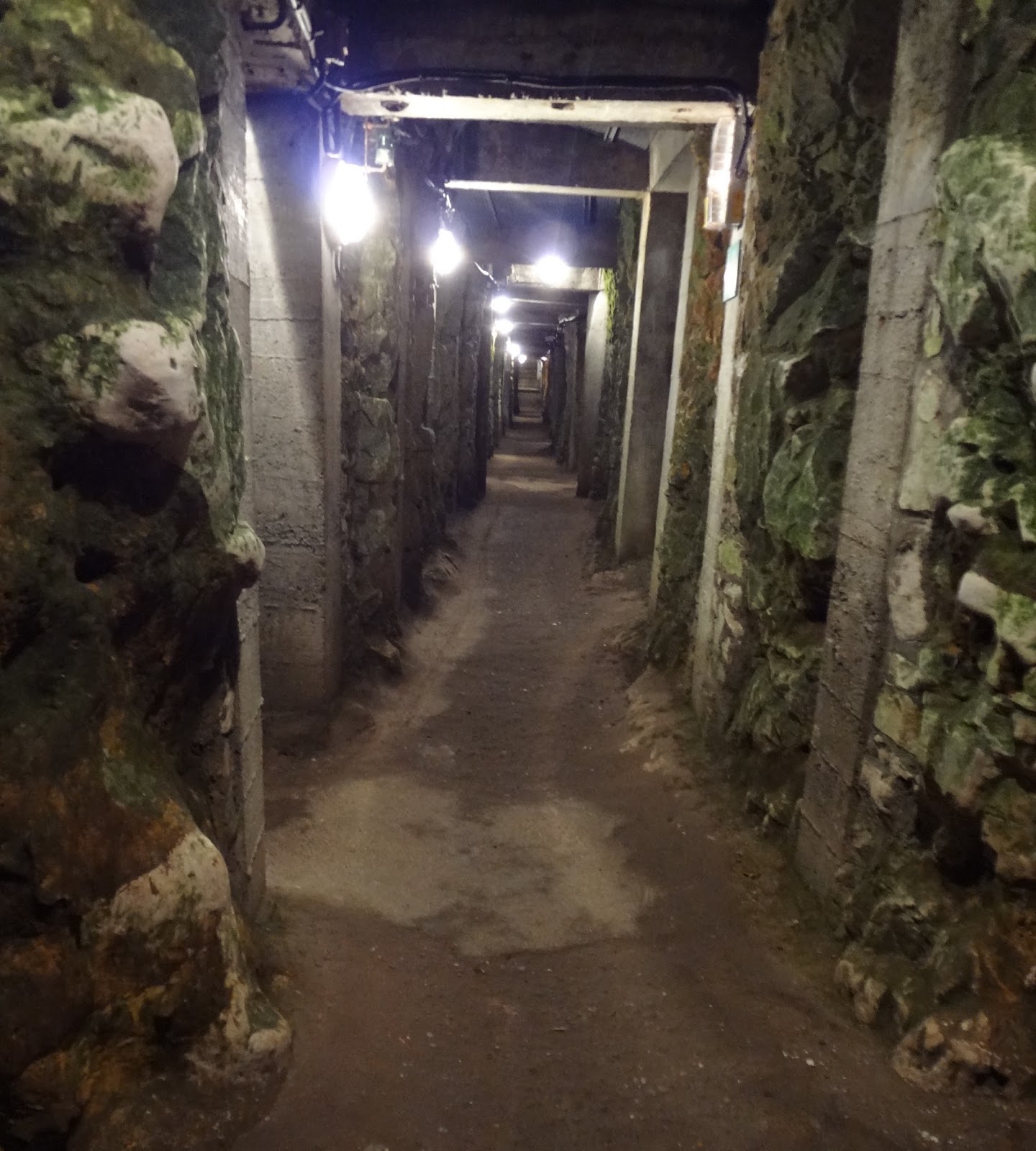
Most of the people I knew who served in the wars didn't talk about it – not about the bad stuff. We have to try to understand it outside the history books through the trenches, the tunnels, the exhibits, the graves, the memorials. It's a representation of history, an album of pictures that's put been put together with love and respect and with much dignity. There's an air of sadness all around but enduring the sadness is surely the least we can do.