Showing posts with label Symphony NS. Show all posts

Sunday, May 1, 2016

Gustav Holst: music-you-won't-be-lulled-to-sleep-by

We had a very busy weekend, with activities that got us up early in the morning, kept us on our feet for hours at a time, and just generally doing responsible things for two days that in the end, left us tired out.

Our final event of the weekend was a Sunday evening concert with Symphony Nova Scotia — the final concert of the current season. Dan and I made a little joke going in that we'd probably settle into those soft comfy seats at the Rebecca Cohn and have a nice nap.

It turned out, however, to be music-you-won't-be-lulled-to-sleep-by.

The music director of Symphony NS is Bernhard Gueller. He's a very accomplished musician and conductor and I'm sure we're very fortunate to have him.
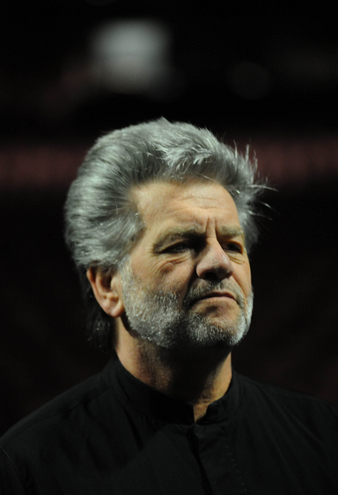
Maestro Gueller

One of the things I like about him is the intimate way he talks to us — a full house in a 1,000 seat theatre — as if he's speaking to us across the kitchen table. He tells us about the music we're about to hear, often about where and when it was first performed and how its first audience responded to it.

The main event of our concert was after the intermission — Gustav Holst's The Planets.

Gustav Holst

It was first performed in 1918 and a reviewer said the audience (still suffering the consequences of the First World War) found the brutality of the first movement (Mars, the Bringer of War) almost unbearable. I didn't find it unbearable but it was brutal — it was very far from being the gentle and melodic lullaby that would have put us to sleep.

The subsequent movements were all different from each other, in mood and tone. Holst had written The Planets not from astronomy but from astrology so his message in each case was specific: Venus, the Bringer of Peace; Mercury, the Winged Messenger; Jupiter, the Bringer of Jollity; Saturn, the Bringer of Old Age; Uranus, the Magician; and Neptune, the Mystic.

I found each of the pieces to be very interesting music and, as I always do, I tried to make a connection with the composer. I read in the program that Gustav Holst was not a happy man. He always saw himself as a failure, was always short of money and unable to make a living as a composer — he had to work as a school-teacher and occasional orchestral trombone player.

He had his first success with The Planets but he was shy and found his fame hard to deal with. Sometimes you just can't win.

Before intermission, we'd heard a sad piece from Peter Grimes by Benjamin Britten — a passacaglia.

The passacaglia (/pæsəˈkɑːliə/; Italian: [pasːaˈkaʎːa]) is a musical form that originated in early seventeenth-century Spain and is still used today by composers. It is usually of a serious character and is often, but not always, based on a bass-ostinato and written in triple metre.

And we heard the delightful mezzo-soprano Allyson McHardy singing five "Sea Pictures" by Sir Edward Elgar.

They were lovely songs and I guess we could have fallen asleep during her performance but that would have been rude and we didn't.

This is the very dress she was wearing too.

Sunday, March 6, 2016

An 'emotional journey through anger, defiance and triumph'

Every year, Symphony Nova Scotia and the Nova Scotia Youth Orchestra get together for a joint performance. It's a big event, with more than 100 musicians on the stage and it's one that all the musicians – both the young ones who are getting this wonderful opportunity and the experienced ones, who get to be teachers and mentors – value and enjoy.

Last year, the concert was cancelled because of one of our legendary 2015 snowstorms. It wasn't only the audience who wouldn't have been able to get there – we were drifted in and we live nearby – but trying to get all those musicians there was not even considered. It must have been a great disappointment after all the practice and all the hard work.

This year's concert was scheduled for today, Sunday, which is a good thing because the snowstorm was yesterday. It probably wasn't enough snow to have cancelled the concert. Even still, it was a relief for everyone.

It's always nice when an evening with the symphony offers a "first."

The concert will also feature Carl Maria von Weber’s rich, haunting Clarinet Concerto no. 1, performed by guest clarinetist Marc Blouin. Marc is a Toronto native who studied in Halifax for many years, and is a former member of the Dalhousie Symphony Orchestra and the Nova Scotia Youth Orchestra.

There were obviously lots of friends and former classmates of Marc in the audience as when he took the stage, there were whoops and hollers that were very welcoming. He smiled broadly.

As for the "first" – I had never heard a Clarinet Concerto before. It was a complex piece of music for a young man and I thought he did a lovely job. The audience rewarded him with raucous applause and I'm sure it was a red-letter evening for him.

The main event, however, and the real reason those 100 musicians were there on stage, was Dmitri Shostakovich's Symphony No. 10 in E Minor op.93.

This intensely powerful symphony is universally regarded as the Russian composer’s finest, and also his most personal. It was written in 1953, immediately after the death of Joseph Stalin, and its emotional journey through anger, defiance, and triumph reflected Shostakovich’s own experience under the Soviet regime.

It's not pretty music, that's for sure, and the audience doesn't leave the auditorium humming the tunes. But it's compelling and powerful. Maestro Gueller had talked to us about the composition before they began to play and he described the circumstances under which it was written. He said the music is harsh and angry. The second movement is fast and violent.

Often, if the music is not quite to my taste, I can pass the time watching the musicians, enjoying the ritual. This time, I was pulled into the chaotic centre of the sound and I could feel my heart beating faster during some of the passages. All I could think of was the emotion that Shostakovich was feeling when he wrote it. That was quite a feat of composing.

It must truly have been a huge challenge for those young musicians to have participated in this performance. It must have been a giant step in their young careers.

During his introduction, after providing us with the information he thought we needed, Maestro Gueller said, "I can't tell you to enjoy this music. But I hope you will be impressed."

And I was. We were.

Thursday, February 18, 2016

'. . .grandiose, tender, stormy, graceful and explosive'

I started this blog – Each New Day – on September 8, 2015. One of the things I said in my opening post was:

. . .I plan to write here often (I almost said “every day” but that puts a lot of pressure on me) so it’s a way for me to practice self-discipline. I preach self-discipline a lot so it’s good for me to practice what I preach.

I remembered having written something like that so I looked back to get the exact quote.

When I make a commitment to do something – like write every day – I take it very seriously. Of course the commitment is only to myself but that doesn't diminish it. I feel kind of bad if I get up in the morning and I haven't put up a new post the day before. I've become attached to the feeling of satisfaction and accomplishment.

I never run out of subject matter but occasionally, I have a number of posts that want to be written but they require more work, more research, more thinking-through so I put them aside. It's times like that when I go to my archives or do a repeat from this very blog. That works too.

Having said that: we enjoyed a splendid concert this evening with Symphony Nova Scotia and a guest conductor, Jean-Marie Zeitouni.

It was Russian night and featured music by Alexander Borodin, Nikolai Rimsky-Korsakov and Igor Stravinsky. The highlight though was Pyotr Ilyich Tchaikovsky's Concerto for Piano no. 1 in B-flat minor played by guest artist, André Laplante.

Our program pointed out that if anyone in the auditorium were asked to hum a tune from any piano concerto, chances are they'd come up with the opening bars of this concerto, "one of the most memorable melodies ever composed." It's true, it's very familiar. You could hum along almost throughout.

But no matter how many times you've heard it, nothing could compare with the experience of seeing/hearing a pianist like André Laplante performing it just a few metres away. I could quite literally feel my heartbeat speeding up during certain parts. He projected the intensity that he was feeling as he played.

By turns grandiose, tender, stormy, graceful, and explosive, this masterwork remains one of the best-known and best-loved piano concertos of all time.

It was also considered so difficult when first written that Tchaikovsky eventually made some changes that made it more playable. It's still considered technically challenging. André Laplante did a masterful job so much so that the usually proper Halifax audience applauded after the first movement, unable to restrain itself. (I've only seen that once before during a performance by the irresistible violinist, Giora Schmidt.)

Once again, we were uplifted and educated by an evening of fine music and I enjoyed writing this even though it might have seemed that I was making excuses when I began. Not at all. I was just talking myself into it.

Wednesday, February 3, 2016

. . .' a place to rest my weary head' *

We went to a concert on Sunday afternoon. I dragged myself out of my sick bed, put myself together and fixed myself up by increments: as long as I could stand at the bathroom mirror, I'd style a bit of hair, paint a bit of face until I had to rush back to sit on the bed long enough to regain my strength to carry on. When I was ready, off we went.

I was let off right at the door and went directly to my seat — no milling around in the lobby. My seat was on the aisle so I wasn't a problem for anyone. We managed to leave the theatre just as efficiently; we didn't see anyone we knew so there was no social component to our afternoon.

Was it worth it? Yes, it was. I wouldn't put myself through that for just anyone but it was a special concert. It was Symphony Nova Scotia with special guests, the Vienna Boys Choir. I figured I might not get too many chances to see the Vienna Boys Choir — at least until we go to Vienna — so I made the effort.

(I borrowed this photo from their visit to Manitoba last year — same conductor, and we recognize several of the boys in this photo.)

There's been a Vienna Boys Choir since 1498. Today, there are 100 active choristers who make up four touring choirs. When we were walking to our car post-performance, there were people behind us and one asked the other, "How do you get into the Vienna Boys Choir?" Of course, Dan and I — very quietly — said to each other, "practice, practice, practice."

In fact though, there are rigourous auditions, demanding academic standards, and yes, lots and lots of practice. The boys start training at the age of eight, start touring at 10, and must leave the choir when their voice breaks.

The Vienna Boys Choir was here to perform with Symphony Nova Scotia under the sponsorship of David and Margaret Fountain. The Fountains are very rich. This is their house:

Their money is inherited but they must be doing something right because they don't seem to be running short. (A couple of Christmases ago, they flew Tony Bennett in to entertain at their Christmas party but he was only for their invited guests. The Vienna Boys Choir was available to anyone who could buy a ticket — before they sold out, which they did very quickly.)

The Fountains are patrons of the Arts which I appreciate. I think the Arts should be generously supported and the Fountains have definitely come through with that. They have given millions of dollars to the Symphony, to Neptune Theatre, to the Art Gallery of Nova Scotia, to the Nova Scotia College of Art and Design — and to many other art-centred institutions in Halifax. They have things named after them too: the main-stage auditorium at Neptune Theatre, for example, is called "Fountain Hall." At least they have a nice name. I'm told they're nice people.

When I got home from the concert, I got back into my bed and was tucked in once again. As I lay there, feeling cold and shivery and very unwell, all I could think was how grateful I was to be in my warm — my heated! — bed, with extra blankets when I was feeling this way. I tried to imagine how I would feel if, instead of my bed, I was on the street. In a stairwell. Even in a shelter.

Because the homeless must feel ill a lot of the time. What must it be like, to feel the way I was feeling, and be lying on a grate on the sidewalk? I could hardly bear the thought.

"I wish David and Margaret would build a lovely place for street people to go, where they would find a soft warm bed with lots of blankets and someone to ask if there's anything they need," I said to Dan. Because he likes to humour me, he said, "And David could have wonderful music piped in and Margaret could hang beautiful art on the walls."

But I know that it's not David and Margaret's job to provide that refuge. It's our job, the people's job, working with our three levels of government to take care of each other, especially those who are most vulnerable. And a pleasant place with warm beds (and good music and fine art) is not enough — although it's something. What's needed is a comprehensive program to provide safe housing for everyone who needs it. It should be the most fundamental thing there is: a roof over one's head.

The former NDP government had launched a Housing Strategy which disappeared when the government was defeated in 2013. It's shameful that we can continue to walk down the street and step over the misery at our feet and pretend we don't see it.

I hope David and Margaret Fountain continue to give generously to the Arts and I hope they pay lots and lots of taxes. They can afford it and the rest of us should not complain about what we're chipping in too. There are many big issues that need taking care of but the next time you're sick and you're feeling cold and shivery and you snuggle deeper into your blankets, try to imagine yourself in a threadbare sleeping bag on the street. How can we live with that?

Just so you know: when I started writing about going to see the Vienna Boys Choir, I had no idea it was going to turn into a plea for affordable housing. Sometimes, that just happens.


* I would love to be able to offer an attribution for this line but it seems that many poets and song-writers and story-tellers have used it in one way or another so I'm going to consider it to be in the public domain.

'. . . a place to rest my weary head' *

We went to a concert on Sunday afternoon. I dragged myself out of my sick bed, put myself together and fixed myself up by increments: as long as I could stand at the bathroom mirror, I'd style a bit of hair, paint a bit of face until I had to rush back to sit on the bed long enough to regain my strength to carry on. When I was ready, off we went.

I was let off right at the door and went directly to my seat — no milling around in the lobby. My seat was on the aisle so I wasn't a problem for anyone. We managed to leave the theatre just as efficiently; we didn't see anyone we knew so there was no social component to our afternoon.

Was it worth it? Yes, it was. I wouldn't put myself through that for just anyone but it was a special concert. It was Symphony Nova Scotia with special guests, the Vienna Boys Choir. I figured I might not get too many chances to see the Vienna Boys Choir — at least until we go to Vienna — so I made the effort.

(I borrowed this photo from their visit to Manitoba last year — same conductor, and we recognize several of the boys in this photo.)

There's been a Vienna Boys Choir since 1498. Today, there are 100 active choristers who make up four touring choirs. When we were walking to our car post-performance, there were people behind us and one asked the other, "How do you get into the Vienna Boys Choir?" Of course, Dan and I — very quietly — said to each other, "practice, practice, practice."

In fact though, there are rigourous auditions, demanding academic standards, and yes, lots and lots of practice. The boys start training at the age of eight, start touring at 10, and must leave the choir when their voice breaks.

The Vienna Boys Choir was here to perform with Symphony Nova Scotia under the sponsorship of David and Margaret Fountain. The Fountains are very rich. This is their house:

Their money is inherited but they must be doing something right because they don't seem to be running short. (A couple of Christmases ago, they flew Tony Bennett in to entertain at their Christmas party but he was only for their invited guests. The Vienna Boys Choir was available to anyone who could buy a ticket — before they sold out, which they did very quickly.)

The Fountains are patrons of the Arts which I appreciate. I think the Arts should be generously supported and the Fountains have definitely come through with that. They have given millions of dollars to the Symphony, to Neptune Theatre, to the Art Gallery of Nova Scotia, to the Nova Scotia College of Art and Design — and to many other art-centred institutions in Halifax. They have things named after them too: the main-stage auditorium at Neptune Theatre, for example, is called "Fountain Hall." At least they have a nice name. I'm told they're nice people.

When I got home from the concert, I got back into my bed and was tucked in once again. As I lay there, feeling cold and shivery and very unwell, all I could think was how grateful I was to be in my warm — my heated! — bed, with extra blankets when I was feeling this way. I tried to imagine how I would feel if, instead of my bed, I was on the street. In a stairwell. Even in a shelter.

Because the homeless must feel ill a lot of the time. What must it be like, to feel the way I was feeling, and be lying on a grate on the sidewalk? I could hardly bear the thought.

"I wish David and Margaret would build a lovely place for street people to go, where they would find a soft warm bed with lots of blankets and someone to ask if there's anything they need," I said to Dan. Because he likes to humour me, he said, "And David could have wonderful music piped in and Margaret could hang beautiful art on the walls."

But I know that it's not David and Margaret's job to provide that refuge. It's our job, the people's job, working with our three levels of government to take care of each other, especially those who are most vulnerable. And a pleasant place with warm beds (and good music and fine art) is not enough — although it's something. What's needed is a comprehensive program to provide safe housing for everyone who needs it. It should be the most fundamental thing there is: a roof over one's head.

The former NDP government had launched a Housing Strategy which disappeared when the government was defeated in 2013. It's shameful that we can continue to walk down the street and step over the misery at our feet and pretend we don't see it.

I hope David and Margaret Fountain continue to give generously to the Arts and I hope they pay lots and lots of taxes. They can afford it and the rest of us should not complain about what we're chipping in too. There are many big issues that need taking care of but the next time you're sick and you're feeling cold and shivery and you snuggle deeper into your blankets, try to imagine yourself in a threadbare sleeping bag on the street. How can we live with that?

Just so you know: when I started writing about going to see the Vienna Boys Choir, I had no idea it was going to turn into a plea for affordable housing. Sometimes, that just happens.


* I would love to be able to offer an attribution for this line but it seems that many poets and song-writers and story-tellers have used it in one way or another so I'm going to consider it to be in the public domain.

Saturday, October 17, 2015

Dressing up, dressing down

We went to a concert this week to celebrate the 150th birthday of Sibelius with Symphony Nova Scotia and guest violinist, Giora Schmidt. It was our third time seeing/hearing Giora and I've informed Symphony NS that we will happily attend every time he comes back to play here.

When we saw him last time, even the sophisticated Halifax audience burst into applause after the first movement of the concerto he was playing and he laughed because it was so spontaneous that the audience clearly couldn't help itself. It happened again this time – applause mid-concerto but no harm done. He's so cheerful and pleasant that it only adds to his performance.

He's a showman too, of course – which is probably partially responsible for the audience reaction – but he's fun. He's the son of two Israeli musicians, was raised in the US and has been playing violin since he was four.

If Ashley is the genius of the fiddle, Giora is the genius of the violin.


We had a conversation at the concert about the way people dress. It used to be that people would dress up somewhat for a concert but over the years, we've noticed that changing. More people than not nowadays, just wear whatever they had on during the day. In one way, that's rather nice. It's as if they feel comfortable and at home and they dress the same way they would if they were going out to pick up groceries.

Not me though. I'm one of the one who dresses up a bit. I say to myself, "It's the Symphony, for God's sake!" So although I can appreciate the people who take it casually, I like to treat it as if it's special. I dress up a bit for the theatre too. Not for movies, but for live theatre.

It's interesting, I noticed at the theatre that, besides me, the women who were dressed up, were young women – women in their 20s. Giora attracts a young audience and maybe they don't have the same sense of familiarity with their surroundings as their older audience-mates and maybe they think it's proper to dress up. It could also be as simple as the fact that there aren't that many places where people dress up nowadays so it gives them a chance to wear their pretty clothes.

I have some pretty clothes. I saw an article in a magazine not too long ago (yes, at my hair salon) that asked the question: Do you dress appropriately for your age? I didn't read the article but I'm guessing they didn't offer the option, "I have no idea," as an answer. I'll tell you this though: I don't wear old-lady clothes.

But who decides if they're appropriate?

I have a lot of clothes that glitter and sparkle. I have both of these and several in different colours:

I wear them under pretty jackets. This is the sort of thing I would wear:

I have all these – and probably more:

I have nice white blouses – some a little dressier than others:

I usually wear black trousers.

In winter, I wear much the same styles but turtle-neck instead of tank top and maybe a sweater instead of a blouse. The basic style remains the same though.

I have nice jewellery. There are days when I decide I'd like to wear a certain pair of earrings and I build my day's wardrobe around them. It makes getting dressed so easy! I'll come back some day and tell you about my jewellery.

Sunday, October 4, 2015

The genius of hip hop

I get a little impatient – not that I ever show it, mind you! – with people who make such sweeping statements as, “I don’t like jazz.” Or, “I don’t like classical music.” Or its subset, “I don’t like opera.”

There is so much jazz, so much classical, so many operas. How is it possible to dismiss such vast swaths of music? I hesitate to put it this way but it shows a willful ignorance to throw out such generalizations and it shows a kind of close-mindedness that is not admirable.

Having said that, I know there are music-lovers who agree with me on jazz and classical but who would never criticize someone who said, “I don’t like hip hop.” Oh yes, much easier to go along with that one, isn’t it?

There’s a lot to dislike in a lot of hip hop – the violence, the misogyny, the hatefulness – and yet, like other branches of music, there’s something to love too.

Which brings me to Buck 65, whom I’ve loved for a long time. Buck 65 – also known as Rich Terfry* from Mount Uniacke, NS – is a hip hop artist who’s a treasure. He’s a poet and a humanitarian and an astute observer of the human condition. He’s eloquent and funny.

We went to see him last evening in concert with Symphony Nova Scotia. It was a wonderful combination – our superior musicians paired with the poetry of Buck 65 made for a memorable performance.

We’re grateful supporters of Symphony NS and we choose a diversity of concerts over the season. We usually try to do at least one concert in the “pop” category. Last year, it was genius fiddler, Ashley MacIsaac. This year, the genius of hip hop, Buck 65. It’s always an eye-opener to see these artists in combination with the symphony. I recommend it if you get the chance.


*Listeners to CBC Radio – I stopped listening to radio a few years ago – will know Rich from his hosting duties on CBC Radio 2.